AI-generated visibility summary

AI visibility summary for SceneGenerator

SceneGenerator currently has no measurable presence in AI-generated search results. Across three engines (ChatGPT, Google AI Overview, and Google Search) and three prompts, the brand was mentioned zero times and cited zero times, yielding a 0.0 overall score. This total invisibility is consistent across all engines, meaning no single platform offers a relative strength; the weakest performance is effectively uniform. Competitor pressure is severe. Adobe leads with a 55.6% mention rate and 66.7% citation rate, followed by Canva (66.7% mentions, 22.2% citations) and Claid (33.3% mentions, 33.3% citations). Adobe alone accounts for 26.5% of all cited domains, while SceneGenerator appears in none. Citation gaps are absolute: the brand holds no citations, while competitors like Adobe (30 citations) and Claid (12) dominate the cited domain landscape. A practical implication is that SceneGenerator is entirely absent from recommendation, how-to, and discovery queries, meaning potential customers researching AI tools for product ad backgrounds, campaign visuals, or ecommerce banners will never encounter the brand. Without any baseline mentions or citations, the brand must first establish visibility through targeted content and partnerships before it can compete for AI-generated recommendations.

Scan evidence for SceneGenerator

Visibility score
0.0
Mention rate
0.0%
Citation rate
0.0%
Engines
3
Prompts
3

Strongest engines

EngineScoreMentionsCitations
ChatGPT 0.0 0.0% 0.0%
Google AI Overview 0.0 0.0% 0.0%
Google Search 0.0 0.0% 0.0%

Visibility gaps

EngineScoreMentionsCitations
Google Search 0.0 0.0% 0.0%
Google AI Overview 0.0 0.0% 0.0%
ChatGPT 0.0 0.0% 0.0%

Competitive landscape

  1. Adobe adobe.com Score 53.9
  2. Canva canva.com Score 43.9
  3. Claid claid.ai Score 32.6
  4. Photoroom photoroom.com Score 32.0
  5. Sivi sivi.ai Score 23.1
  6. Adcreative adcreative.ai Score 21.3
  7. Pebblely pebblely.com Score 21.2
  8. Thebrief thebrief.ai Score 15.6

Most cited domains

  1. adobe.com 30 citations · 26.5%
  2. claid.ai 12 citations · 10.6%
  3. canva.com 11 citations · 9.7%
  4. photoroom.com 7 citations · 6.2%
  5. pebblely.com 5 citations · 4.4%
  6. thebrief.ai 3 citations · 2.7%
  7. adcreative.ai 3 citations · 2.7%
  8. sivi.ai 2 citations · 1.8%

Prompt highlights

PromptEnginesBrand mentionsBrand citations
best AI tool to generate product ad backgrounds with lighting and mood 3 0 0
how to turn a product brief into a campaign-ready visual 3 0 0
AI banner generator for ecommerce ads 3 0 0
Your turn

Are AI assistants
recommending you?

Your customers ask ChatGPT, Grok, Claude, Gemini, and Perplexity before they buy. RankBits shows you exactly how your brand surfaces across every AI engine — run your own scan below.

Try one free scan — no signup needed.

Measure the channels buyers now ask first

AI answers do not behave like classic rankings. RankBits checks the actual prompts, engines, citations, and competitors shaping those answers.

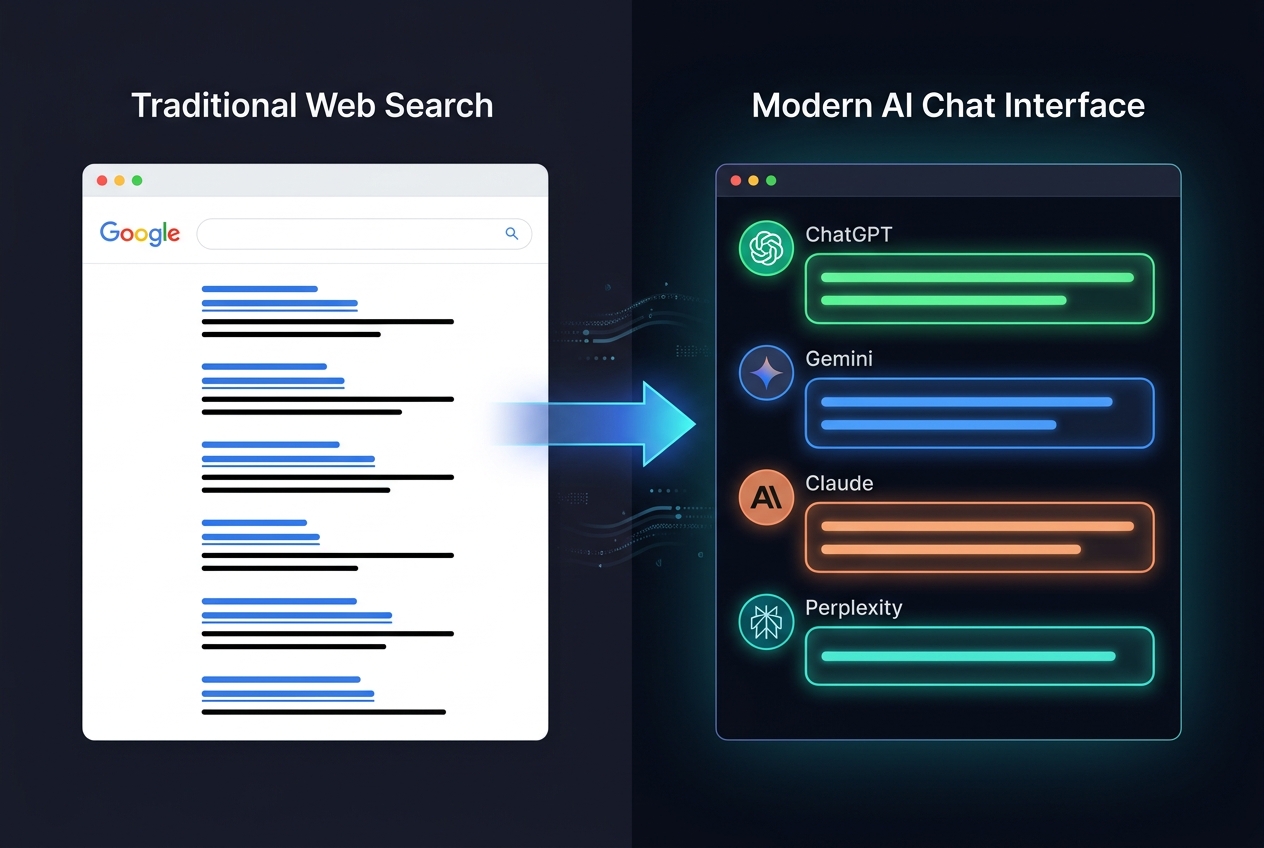
Shift from traditional search to AI-powered discovery
📉

AI answers are a new discovery surface

Google said AI Overviews reached more than 1.5 billion monthly users in 2025, while ChatGPT was confirmed at more than 2.5 billion prompts per day.

🤖

AI citations are not the same as SEO rankings

A 2026 measurement study found nearly 30% of Google AI Overview cited domains did not appear in the co-displayed first page of organic results.

📊

Turn ad clicks into a measurable AI audit

Run a scan, see the prompts where your brand is missing, and track whether visibility improves as you publish, earn citations, and refine positioning.

18
AI engines and search sources tracked
2.5B+
ChatGPT prompts per day, confirmed by OpenAI
1.5B+
Monthly Google AI Overview users reported in 2025
~30%
AI Overview cited domains absent from first-page organic results

Sources: OpenAI-confirmed ChatGPT usage, Google AI Overview reach, 2026 AI Overview citation study.

Developer API

Run RankBits scans from your own app or workflow

Every registered user can create API tokens, start async scans, check credits, and retrieve detailed scan results over HTTP.

View API docs